Gaza truce turns to strategic impasse
TEHRAN – The resistance in Gaza is fighting a battle guided by a logic of achievable deterrence.
It understands that attaining military superiority after two years of a genocidal war is extremely difficult. Politically, however, it seeks to prevent the Israeli regime from securing a political victory.
Gaza is living through the most difficult phase in the history of the Palestinian struggle. Amid ongoing international movement and talk of entering the second phase of U.S. President Donald Trump’s plan, the Strip stands at a dangerous crossroads.
It faces an exceptionally sensitive equation: balancing battlefield conditions, accumulation of pressure, and the preservation of a deterrence strategy on one side, against political pressure and attempts at subjugation on the other.
Despite the complexity of this equation, Gaza raises a profound and troubling question: Does justice and fairness still exist in this world?
There is an important historical logic that affirms the right of peoples living under occupation to resist, as guaranteed by international laws and conventions, and their right to freedom and independence.
Yet what we are witnessing today suggests a world that has lost its sense of justice, freedom, and human dignity. The Palestinian people and their long struggle are not isolated from a broader historical pattern marked by repeated international betrayal, with few exceptions.
Among those exceptions are Arab and Islamic resistance movements that supported Palestine not as a political issue but as a principled cause, paying a heavy price in blood and sacrifice. Notably among them are Lebanon’s Hezbollah and the Sanaa government in Yemen represented by the armed forces there.
After the immense cost paid by the Palestinian people during this genocidal war, the most accurate description of the current moment is a struggle over the final outcome, which has yet to be decisively settled: who will impose their conditions, and who will write the historical narrative of the post-genocide phase.
Gaza is now experiencing an unequal battle of wills. The Zionist regime is working to break this will and secure a strategic victory. A close look at the regime’s current strategy reveals a core principle: subjugating the social environment that supports the resistance rather than defeating the resistance itself.
These actions are carefully calculated pressure tools designed to shift the cost from a military level, directly confronting the resistance, to a social level. This serves the long-term objectives of the regime’s far-right leadership.
The key question is whether this strategy has achieved what Netanyahu and his team seek: Disarmament, Palestinian surrender, forced displacement, or the imposition of a new deterrence equation. Despite the immense humanitarian suffering, witnessed by the entire world, none of these outcomes has materialized. There has been no surrender, no social collapse, and no breakdown in the resistance’s military or political performance.
Historically, disarmament has not led to just settlements. Instead, it has created vacuums that the regime exploits to impose dominance, expand settlements, and entrench occupation. The experience of the Palestine Liberation Organization and the Oslo Accords is a clear example.
The regime used Oslo to undermine the dream of a Palestinian state through settlement expansion, annexation, and Judaization. For the Palestinian resistance, weapons are therefore a strategic instrument of political survival before being a tool of armed struggle. Any talk of disarmament without a clear political horizon guaranteeing Palestinian rights is an existential gamble and a grave strategic error.
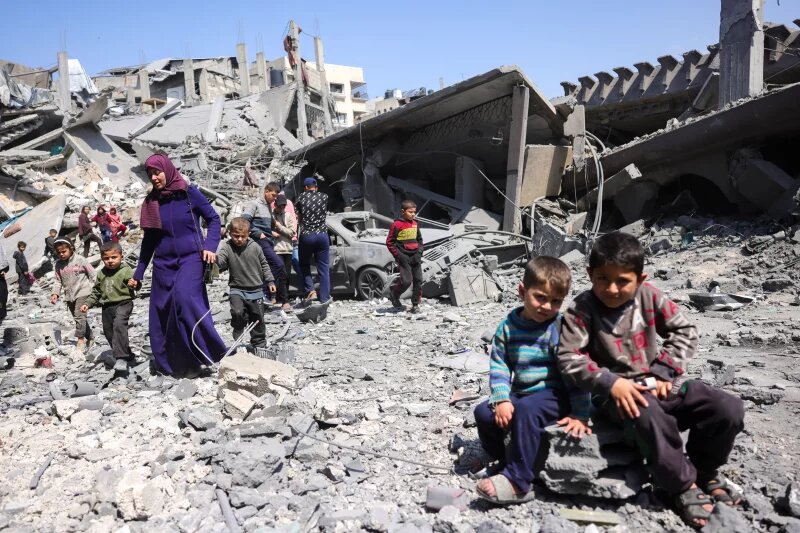
What is unfolding in Gaza has exposed a profound global moral shock. The unprecedented use of force by Israeli occupation forces against Palestinian civilians, acts of genocide and ethnic cleansing, comprehensive siege, and systematic starvation have revealed the failure of the international system to stand with the Palestinian people.
This exposure implicates not only the Israeli occupation regime but also Arab, Islamic, and international systems that stood by as spectators.
Strategically, Gaza is caught in an extremely complex and dangerous equation. The Zionist regime is stuck, unable to achieve a decisive victory or an absolute triumph. Palestinian resistance forces succeeded in securing the release of prisoners through negotiation rather than military defeat, which in itself constitutes an Israeli regime failure.
At the same time, the outcomes of the war have not enabled the Palestinian resistance to fully end the genocide on its own terms. This raises the central question: what is the solution?
Gaza is experiencing a phase of strategic stalemate. This stalemate may open the door to a new reality defined by conflict management rather than conflict resolution. This is occurring in the absence of a unified Palestinian national project or an effective and united approach by the Arab world.
Here steadfastness becomes the only option, as the alternative is surrender, an option absent from the Palestinian struggle’s vocabulary.
This leads to another pressing question: what scenarios might emerge in the next phase in Gaza, and can President Trump’s plan succeed?
Following two years of genocidal war, Trump’s plan was introduced, and its first phase was implemented. For observers of the truce agreement, it is clear that the Palestinian resistance adhered to the plan with near-total compliance.
In contrast, the Zionist regime committed repeated violations. These breaches are significant and cannot be ignored. As discussions turn to the second phase amid Netanyahu’s trip to Washington, framed as converting the genocidal war’s outcome into lasting political gains, it becomes evident that this approach does not seek a just settlement.
Instead, it aims to entrench new realities that reduce the Israeli regime’s cost of genocidal war and reframe Gaza within a formula of temporary stability rather than a historic, comprehensive solution. Against this backdrop, several scenarios emerge.
The first scenario involves intensifying pressure and renewing the siege to force disarmament in exchange for limited security and political arrangements involving Palestinian and regional actors. The essence of this scenario is to transform Gaza into an area stripped of political agency, surviving on humanitarian aid with no clear sovereign horizon.
However, this approach ignores the fact that weapons are not a marginal issue but a core element of balance and deterrence. Disarmament without a comprehensive political solution would not bring stability, but rather a delayed explosion.
The second scenario centers on a long-term truce accompanied by easing the siege and international guarantees. The aim here is not to end the genocidal war, but to freeze and manage it at a lower political cost. This would create a fragile and temporary stability, prone to collapse at the first serious test, while reproducing the siege through less overt but equally damaging social and economic pressure.
The third scenario seeks to alter the Palestinian leadership structure by politically weakening the resistance and recycling the Palestinian Authority or producing an internationally acceptable alternative.
This effectively means reengineering Palestinian political leadership. It reflects a long-standing American vision of finding a manageable Palestinian partner rather than an independent decision-maker. Such a scenario is highly risky, as it disregards the popular weight of the resistance and imposes a fragile political entity dependent on external power, with slim chances of success.
The fourth scenario is controlled regional escalation. This would function as a pressure tool rather than a full-scale war or genuine stability, whether directly or indirectly through deterrence, threats, prolonged siege, and attrition.
The aim would be to redraw the rules of engagement and extract concessions from all actors aligned with the resistance. This scenario carries serious risks, including wider regional confrontation, and represents the most dangerous outcome for Gaza as it turns suffering into a permanent condition.
The final scenario rests on a U.S. desire to ensure the success of Trump’s plan and a shared recognition that disarmament by force is impossible. It would involve reshaping Gaza’s political scene by reducing the visible role of Hamas and the resistance, while installing a technocratic government under regional supervision, without complete or radical disarmament.
While difficult, this scenario is not impossible if sufficient political will exists and is imposed on the occupying Israeli regime.
Gaza has become a strategic impasse not only for Palestinians, but for all international powers, foremost among them the United States. Small in geography, Gaza is immense in impact and centrality. What is at stake goes beyond the future of the resistance; it will define the shape and trajectory of the entire Palestinian struggle.
The international gamble on defeating the resistance has failed. The gamble on breaking the Palestinian will has also failed. Even the attempt to manage the conflict without addressing its root causes has proven a costly and losing gamble.
It is not only President Trump’s plan that is in crisis. Any plan, no matter how many are proposed, will fail as long as it ignores the core of the issue and substitutes conflict management for genuine resolution. Two full years of genocide have failed to defeat the Palestinian people. This reality cannot be ignored or bypassed in any future calculations, regardless of shifting plans, changing labels, or evolving circumstances.
Until then, Gaza will remain the hardest test and the deepest strategic dilemma for the international community, a mirror reflecting the failure of international will and Israeli military power when confronted with the Palestinian will to survive, rooted in land, identity, and cause.
Leave a Comment